Candlestick charts (K-line charts) are the most commonly used chart type in cryptocurrency trading. Learning to read them is the foundation of technical analysis. Many beginners feel overwhelmed by dense candlestick charts, but the basics are actually quite straightforward.
Basic Structure of a Candlestick
Each candlestick represents price changes within a specific time period, composed of four data points:
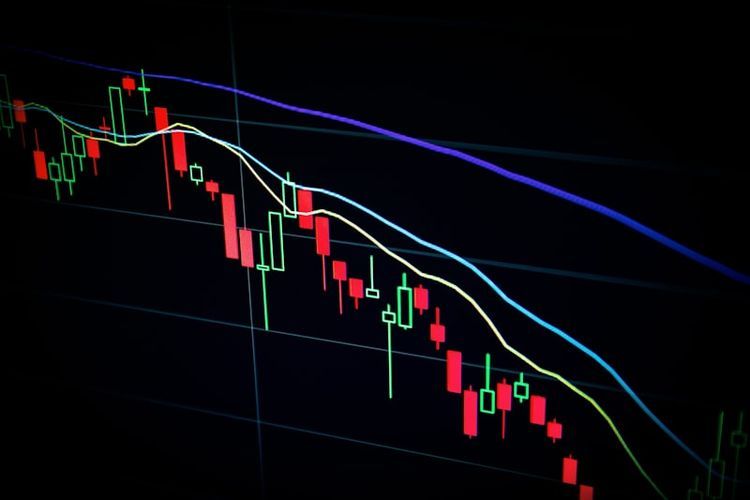
- Open: Price at the period's start
- Close: Price at the period's end
- High: Highest price during the period
- Low: Lowest price during the period
The "body" represents the range between open and close. The thin lines extending from the body are "shadows" (wicks), showing the high and low.
Bullish vs Bearish Candles
Bullish candle (green/white):
- Close higher than open
- Indicates price rose during the period
- Body bottom = open, top = close
Bearish candle (red/black):
- Close lower than open
- Indicates price fell during the period
- Body top = open, bottom = close
Note: Color schemes vary by platform. Confirm your platform's color mapping in settings.
What Do Shadows Mean?
Upper shadow (wick above):
- Price pushed higher but was rejected
- Longer upper shadow = stronger selling pressure above
- Usually a bearish signal
Lower shadow (wick below):
- Price dipped lower but recovered
- Longer lower shadow = stronger buying support below
- Usually a bullish signal
Common Candlestick Patterns

Large bullish candle: Long body, strong buying — significant price increase.
Large bearish candle: Long body, strong selling — significant price decrease.
Doji: Open and close nearly identical, very small body. Signals indecision, potential trend reversal.
Hammer: Small body, long lower shadow at a downtrend bottom — bullish reversal signal.
Engulfing pattern: A large bullish candle completely covers the previous bearish candle (bullish engulfing), or vice versa.
Choosing Timeframes
- 1min/5min: For scalpers, high noise, not for beginners
- 15min/30min: Short-term reference for day trading
- 1hour/4hour: Primary reference for medium-short term
- Daily: Most commonly used, suitable for most investors
- Weekly/Monthly: For long-term trend analysis
Beginner tip: Start with daily charts for overall trend, then use 4-hour charts for specific entry/exit points.
Practice reading K-line charts by visiting Binance for real-time charts and technical indicators. Also use the Binance Official App (Apple users, refer to the iOS Installation Guide) to check prices anytime.
Security Reminders
- K-line analysis isn't infallible: Technical analysis is a tool, not a guarantee
- Beware of hindsight analysts: Social media is full of after-the-fact chart analysis
- Avoid overtrading: Seeing signals doesn't mean you must trade — maintain discipline
- Manage your capital: Only risk a small portion of total capital per trade
- Watch for manipulation: Small-cap tokens' charts can be manipulated by whales
- Stay rational: Don't become overconfident after a few successful K-line predictions
K-line Charts vs Time Charts?
Time charts show continuous price curves. K-line charts condense a time period's data into one candle with OHLC — more information density. K-lines are better for technical analysis.
How Long to Learn K-line Reading?
Basic structure takes minutes. Proficiently identifying patterns and applying them in real trading takes months of practice. Start with small amounts.
Are Crypto and Stock K-lines the Same?
Same basic principles. The difference: crypto markets run 24/7 with no open/close restrictions, so timeframe selection is more flexible. Crypto also has higher volatility, making patterns more dramatic.