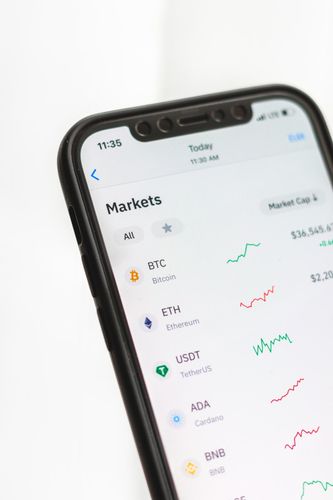
USDT (Tether) is the most widely used stablecoin in crypto, issued by Tether company and pegged 1:1 to the US dollar. With a market cap exceeding $100 billion and daily volume surpassing Bitcoin, USDT is an indispensable tool for crypto investors. You can buy or trade USDT on Binance.
What Is a Stablecoin?
Stablecoins are cryptocurrencies pegged to fiat currencies (usually USD). 1 USDT is designed to always equal $1, solving crypto's price volatility problem.
How Does USDT Work?
- Issuance: Tether receives USD, issues equivalent USDT
- Circulation: USDT circulates on exchanges and blockchains
- Redemption: Holders return USDT for USD
- Reserves: Tether claims every USDT is backed by equivalent reserve assets
USDT runs on multiple chains: Ethereum (ERC-20), Tron (TRC-20), Solana (SPL), BNB Chain (BEP-20), and Layer 2s.
USDT Use Cases
- Trading medium: Most crypto pairs are priced in USDT
- Safe haven: Convert to USDT during market drops
- Cross-border transfers: Faster and cheaper than bank wires (TRC-20 is nearly free)
- DeFi participation: Lending, liquidity provision, yield farming
- Daily payments: Used for commerce in some regions

Chain Selection Guide
| Network | Fee | Speed | Use Case |
|---|---|---|---|
| ERC-20 | $3-20 | Minutes | DeFi, large transfers |
| TRC-20 | ~$1 | Seconds | Daily transfers |
| BEP-20 | ~$0.1 | 3 sec | BNB Chain DeFi |
| SOL | ~$0.01 | 1-2 sec | Solana ecosystem |
| Arbitrum | ~$0.1 | Seconds | Ethereum L2 |
Risks and Controversies
- Reserve transparency: Ongoing debate about whether reserves are fully backed
- Regulatory risk: Global stablecoin regulation is tightening
- Depeg risk: USDT has briefly depegged in extreme conditions
- Centralization risk: Tether can freeze addresses
Security Tips
- Confirm network type when transferring — ERC-20 and TRC-20 are incompatible
- Verify USDT contracts on DEXs to avoid fake USDT
- Don't hold all assets in USDT — diversify with USDC
- Use secure storage — self-custody wallets for large amounts
- Mind the fees — ERC-20 is expensive for small transfers
- Use legitimate channels — buy through regulated exchanges. Binance App, iOS: iOS guide
Will USDT go to zero?
Extremely unlikely but theoretically possible if Tether faces severe financial or regulatory issues.
How to exchange USDT for local currency?
Through exchange C2C (P2P) trading. Pay via bank transfer; seller releases USDT.
Why does USDT sometimes show a price not exactly $1?
Supply and demand. C2C prices also reflect local exchange rate fluctuations.
Where is the safest place to store USDT?
Diversified storage: some on exchanges for trading, some in self-custody wallets (MetaMask, Trust Wallet). Hardware wallets for large amounts.
Sent USDT to the wrong network?
If to a compatible address (same address on ERC-20 and BEP-20), you may recover via private key import. Incompatible addresses may mean permanent loss.