Trading volume is one of the core indicators for measuring market activity, reflecting how much capital is participating in trades over a given period. Many beginners focus only on price movement and ignore volume — this is a common mistake. Candlesticks tell you where the price went; volume tells you whether that move is reliable. Learning to read volume can significantly improve the accuracy of your market analysis.
What Is Trading Volume?
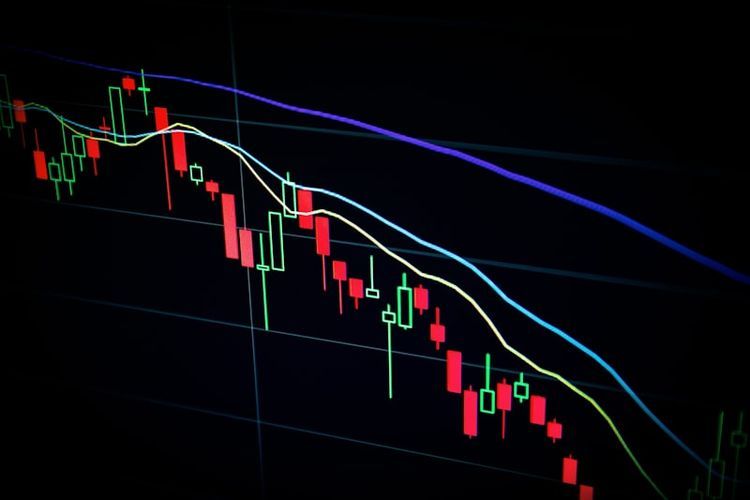
Trading Volume refers to the total quantity or total value of transactions between buyers and sellers within a specific time period. Below the candlestick chart on an exchange, there is usually a row of bars — each bar corresponds to the volume for one candle.
Two ways volume is expressed:
- By coin quantity: How many BTC/ETH were traded (common in spot trading)
- By value: How much USDT was traded (common in futures trading)
The taller the bar, the higher the volume during that period; the shorter the bar, the lower the volume.
How to Read Volume Bars on a Candlestick Chart?
On an exchange's candlestick chart, volume is typically displayed below the price candles:
Bar colors:
- Green/white bars: Correspond to bullish candles, indicating the period closed higher
- Red/black bars: Correspond to bearish candles, indicating the period closed lower
Bar height:
- Tall bar = Active trading, more capital involved
- Short bar = Thin trading, less capital involved
Comparative observation:
- Compare current volume to the average volume over a recent period
- Significantly above average = High volume
- Significantly below average = Low volume
What Are High Volume and Low Volume?
High Volume (increasing volume): Volume increases significantly, well above the recent average. This indicates more market participants with greater divergence in opinions between buyers and sellers. It typically occurs at the start of a trend or at trend reversals.
Low Volume (decreasing volume): Volume decreases significantly, below the recent average. This indicates fewer market participants and thin trading activity. It typically occurs during consolidation or at the end of a trend.
Gradually Increasing Volume: Volume increases step by step, not suddenly surging. This usually indicates the trend is developing in a healthy manner.
Extreme Volume: Volume reaches an extreme level relative to historical or recent averages. Extreme volume often appears near major turning points.
How to Analyze Volume-Price Relationships?
The relationship between volume and price is at the core of technical analysis:
Rising price + High volume (Bullish):
- Price rises while volume increases
- Indicates substantial capital is buying and driving the rally
- The uptrend is likely to continue
Rising price + Low volume (Caution):
- Price rises but volume shrinks
- Indicates buying pressure is weakening
- Upward momentum is insufficient — a pullback may be ahead
Falling price + High volume (Bearish):
- Price drops while volume increases
- Indicates substantial capital is selling off
- The downtrend may accelerate
Falling price + Low volume (Watch closely):
- Price drops but volume shrinks
- Indicates selling pressure is weakening
- May be nearing a bottom area
Bottom area + High volume (Important signal):
- A sudden surge in volume at a low price area
- Could indicate smart money starting to build positions
- Needs confirmation with other indicators
How to Apply Volume in Actual Trading?
Breakout confirmation: When price breaks through a key support/resistance level with high volume, the breakout is more likely to be real. A low-volume breakout is often a false breakout.
Trend assessment: A healthy uptrend should be accompanied by gradually increasing volume. If volume keeps shrinking during a rally, be wary of trend exhaustion.
Bottom identification: After prolonged low volume, a sudden surge in volume — especially with a bullish candle with a long lower shadow — may signal a bottom reversal.
Top identification: When price makes a new high but volume doesn't (volume-price divergence), this is a classic top warning signal.
If you want to practice volume analysis in trading, start by registering on Binance official website — the exchange's candlestick charts display volume data by default. Get the Binance official app, and Apple users can refer to the iOS installation guide to check real-time quotes and volume changes anytime.
Security Reminders
Keep these safety tips in mind when using volume analysis for trading:
- Volume can be manipulated: Whales can create fake volume signals through wash trading — this is especially common with small-cap coins
- Don't rely on volume alone: Volume should be combined with candlestick patterns, technical indicators, and other analysis methods
- Differentiate exchange volumes: The same coin may have different volumes on different exchanges — some small exchanges engage in wash trading
- Watch for abnormal spikes: Sudden volume several times the average may indicate a major event or market manipulation
- Maintain risk management: Even when volume signals are clear, always set a stop-loss — no signal is 100% accurate
- Stay calm: Don't impulsively trade just because you see high volume — wait for signal confirmation
Can I Combine Volume from Different Exchanges?
Yes. Some third-party data platforms (like CoinMarketCap and CoinGecko) aggregate total volume across all exchanges, better reflecting overall market activity. However, be sure to exclude data from exchanges known for wash trading.
What's the Difference Between Volume and Turnover?
Volume is the number of coins traded (e.g., 100 BTC), while turnover is the total monetary value traded (e.g., 100 BTC x 65,000 USDT = 6,500,000 USDT). Both are valuable for analysis, but turnover better reflects actual capital inflows and outflows.
What Does 24-Hour Volume Represent?
24-hour volume is the total transaction value of a specific trading pair or coin on an exchange over the past 24 hours. It's an important indicator of a coin's liquidity. Higher 24-hour volume means better liquidity and lower slippage when buying or selling.
What Volume Indicators Are Available?
Common volume-related indicators include: OBV (On-Balance Volume), VOL MA (Volume Moving Average), VWAP (Volume Weighted Average Price), and more. These indicators help you systematically analyze volume trends.