Going long and going short are the two most basic concepts in futures trading. Simply put, going long means buying because you expect the price to rise, and going short means selling because you expect the price to fall. Understanding these two operations is the first step to entering the futures market. If you don't have a trading account yet, you can first register on Binance, then download the Binance App (iOS users refer to the iOS installation guide) to try long and short trades on a demo account.
What Is Going Long?
Going long means you predict the price will rise, so you buy a contract first and sell (close the position) later when the price increases, pocketing the difference.
For example: BTC is currently at 30,000 USDT, and you believe it will go up, so you open a long position. If BTC rises to 33,000 USDT, you close the position and earn 3,000 USDT in profit (excluding leverage and fees). If BTC drops to 27,000 USDT, you lose 3,000 USDT.
The logic of going long is the same as buying on the spot market — buy low, sell high. Most people find it relatively easy to understand.
What Is Going Short?
Going short means you predict the price will fall, so you sell a contract first and buy it back (close the position) later when the price drops, also pocketing the difference.
Continuing the example: BTC is currently at 30,000 USDT, and you believe it will drop, so you open a short position. If BTC falls to 27,000 USDT, you close the position and earn 3,000 USDT. If BTC rises to 33,000 USDT, you lose 3,000 USDT.
Going short is a unique advantage of futures trading — it lets you profit even in bear markets or during price pullbacks. Spot trading only allows going long, while futures enable trading in both directions.
Profit and Loss Calculations
Long P&L
- Profit = (Close Price - Open Price) x Contract Quantity x Leverage
- Profit when Close Price > Open Price; loss when Close Price < Open Price
Short P&L
- Profit = (Open Price - Close Price) x Contract Quantity x Leverage
- Profit when Close Price < Open Price; loss when Close Price > Open Price
Practical Example
Suppose you use 100 USDT as margin with 10x leverage to go long on BTC at 30,000 USDT:
- BTC rises to 31,500 (up 5%), your profit = 100 x 10 x 5% = 50 USDT
- BTC drops to 28,500 (down 5%), your loss = 100 x 10 x 5% = 50 USDT
- A roughly 10% drop would trigger liquidation, losing all your margin
When Should You Go Long?
The following scenarios are suitable for going long:
- The market is in an uptrend: Prices keep hitting new highs, moving averages are aligned bullishly
- Positive news is released: Such as BTC ETF approval, institutional buying, etc.
- Technical support levels: Prices bounce off key support with bullish signals
- Oversold bounce: Prices stabilize after a significant decline
When Should You Go Short?
The following scenarios are suitable for going short:
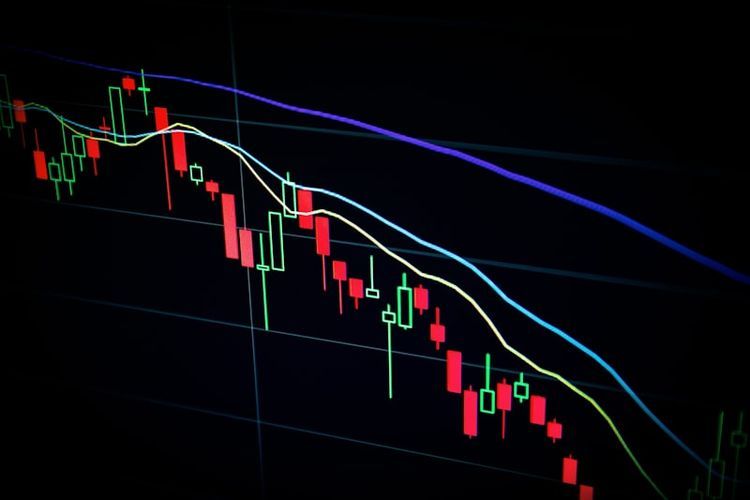
- The market is in a downtrend: Prices keep making new lows, moving averages are aligned bearishly
- Negative news appears: Such as regulatory crackdowns, exchange failures, etc.
- Technical resistance levels: Prices get rejected at key resistance
- Overextended rally: Short-term gains are excessive with severely overbought technical indicators
Important Considerations
Don't Go Long and Short at the Same Time
A common beginner mistake is "betting both sides" — opening both long and short positions on the same asset simultaneously. This wastes fees and adds operational complexity. Pick a direction and stick with it.
Watch the Funding Rate
Perpetual contracts charge a funding rate every 8 hours. When bullish sentiment is strong, longs pay shorts, and vice versa. For longer-term positions, consider the impact of funding rates on profits.
Always Set a Stop Loss
Whether going long or short, always set a stop loss. For long positions, place the stop below your entry price; for short positions, place it above.

FAQ
Is going short harder than going long?
Operationally, they're equally simple — just opposite directions. Psychologically, however, many people are used to the "buy the dip" mentality and need to overcome the fear of seeing prices drop.
Is there unlimited risk with shorting?
In theory, shorting carries unlimited risk since prices can rise indefinitely. In practice, setting a proper stop loss controls your maximum loss.
Can I short on the spot market?
You cannot directly short on the traditional spot market. Only futures trading supports short positions.
Which is more profitable — long or short?
Neither direction is inherently more profitable. What matters is whether your market direction judgment is correct. Bull markets favor longs, bear markets favor shorts.
What is the long-short ratio?
The long-short ratio is the proportion of long vs. short positions in the market. When long positions far exceed short ones, there may be excessive optimism risk, and vice versa.
Safety Tips
- Both long and short futures positions carry liquidation risk — beginners should start with small amounts
- Don't open positions blindly around major news events, as sharp volatility can cause unexpected losses
- Use the official Binance App and avoid unknown third-party tools
- Once you set a stop loss, don't randomly cancel or move it
- Think independently — don't blindly go long just because "everyone is bullish"