Futures trading is one of the most popular forms of derivative trading in the cryptocurrency market. Unlike spot trading, futures don't require you to actually hold any crypto — instead, you profit by predicting price movements. If you're considering entering the futures market, start by registering on Binance and downloading the official Binance app (Apple users see the iOS installation guide) to familiarize yourself with the interface.
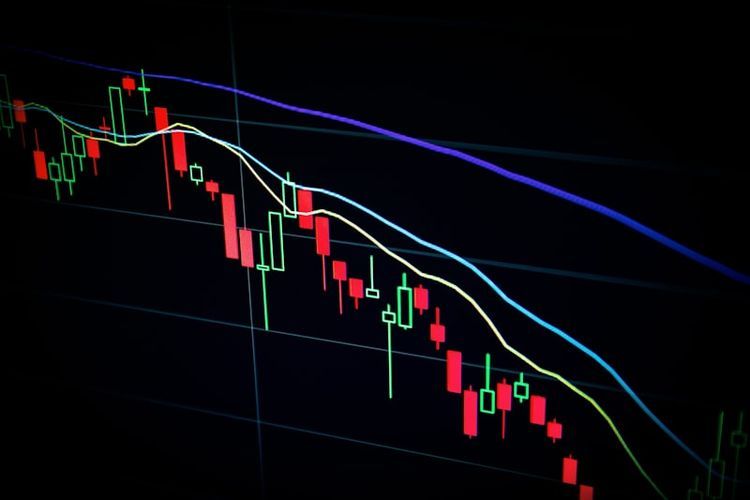
Basic Concepts of Futures Trading
A futures contract is essentially an agreement between a buyer and seller to transact an asset at a specified price at a future time. In crypto, there are two main types: perpetual contracts (no expiry, hold indefinitely) and delivery contracts (settle on a fixed date).
Like stock futures, crypto futures allow two-way trading — you can go long (bet on a rise) or go short (bet on a drop). This means you can profit whether the market goes up or down, as long as you predict correctly.
How Futures Trading Differs from Spot Trading
Ownership
Spot trading means you actually buy and hold crypto — buy 1 BTC and you own 1 BTC. Futures trading means you hold a price contract without owning the underlying asset.
Direction
Spot only allows going long (buy low, sell high). Futures support both directions — you can open a short to profit from falling prices.
Leverage
Spot trading typically has no leverage (or very little). Futures offer 1× to 125× leverage, letting you control a large position with a small amount of capital.
Risk level
Because of leverage, futures carry far greater risk than spot. The worst case in spot is the asset going to zero; in futures, you can be liquidated in minutes, losing all your margin.
Core Elements of Futures Trading
Margin
The capital you deposit to open a position — like a security deposit. The amount depends on the contract value and leverage.
Leverage
A tool to amplify position size. 10× leverage means 100 USDT controls a 1,000 USDT position. Leverage amplifies both gains and losses.
Long and short
Going long means you expect the price to rise and buy a contract. Going short means you expect a decline and sell. You profit only when direction is correct.
Forced liquidation (getting "rekt")
When losses reach a certain level and margin is insufficient to maintain the position, the system forcibly closes it. This is commonly called "getting liquidated" or "rekt."
Who Is Futures Trading Suitable For?
Futures trading isn't for everyone. The following types of traders are better suited:
- Has spot trading experience – At least 3–6 months
- Understands technical analysis – Can read candlestick charts, moving averages, support/resistance
- High risk tolerance – Can handle the psychological pressure of capital loss
- Disciplined – Can stick to stop-loss/take-profit strategies without emotional trading
If you're a complete beginner, start with spot trading to learn market dynamics, then gradually move into futures.

Tips for Beginners Entering Futures
- Start with a demo/testnet to practice opening, closing, and setting stops
- Begin with low leverage (2–3×) — don't jump to high leverage
- Risk only 5%–10% of total capital per trade
- Always set a stop-loss, strictly controlling the maximum loss per trade
- Keep a trading journal and review regularly
After registering on Binance, you can practice futures on the testnet for free.
FAQ
Can futures losses put me in debt?
Major exchanges have negative-balance protection. Your maximum loss is the margin you deposited — you won't end up owing money.
Do I need a lot of money for futures?
Technically you can open a position with just a few dollars, but at least 200–500 USDT is recommended — too little capital is easily wiped out by volatility.
How is futures trading different from gambling?
Futures trading can be supported by technical analysis and strategy. Learning can improve your win rate. But if you trade blindly without analysis or stops, it's no different from gambling.
Should beginners choose perpetual or delivery contracts?
Beginners should start with perpetual contracts — they have the highest volume, best liquidity, and simplest operation, making them the mainstream contract type.
Can you actually make money with futures?
Yes, but statistics show that most retail traders lose money in futures. Profitability depends on your strategy, risk management, and emotional control.
Safety Tips
- Futures trading is a high-risk investment product — participate only after fully understanding the risks
- Never use living expenses or borrowed money for futures trading
- Always trade through the official Binance app to guard against phishing sites stealing your account
- Enable two-factor authentication (2FA) to protect your exchange account
- Don't believe any "guaranteed profit" signal ads
- Have a clear plan for every trade — entry price, stop-loss, and take-profit