"If I lose on futures, will I owe the exchange money?" This is one of the biggest concerns people have before trying futures trading. The short answer: under normal circumstances on major exchanges, no. But you should understand the protection mechanisms and the exceptions. Start by registering on Binance and downloading the official Binance app (Apple users see the iOS installation guide) to learn about the exchange's risk-control system.
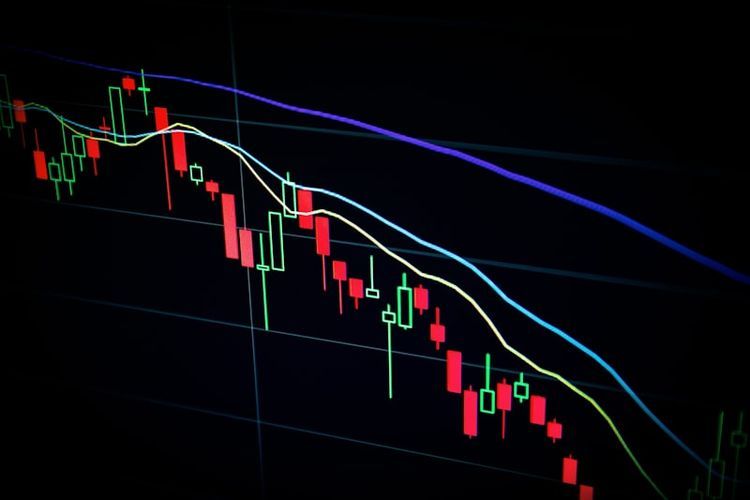
The Worst-Case Scenario in Futures
In the vast majority of cases, your maximum loss is the margin you deposited:
- Isolated margin mode – Maximum loss = the margin allocated to that position
- Cross margin mode – Maximum loss = all funds in the futures account
You will not owe the exchange additional money because of a liquidation. This differs from traditional financial futures markets where "negative-balance debt" can occur.
Negative-Balance Protection Mechanisms
A negative balance (sometimes called "socialized clawback" or "through-liquidation") occurs when, during extreme volatility, the actual liquidation price is worse than expected and the loss exceeds the trader's margin. Theoretically, this would leave the trader with a negative balance.
Major crypto exchanges have mechanisms to prevent this:
Insurance fund
Exchanges maintain an insurance fund to cover negative-balance losses. When a trader's liquidation loss exceeds their margin, the shortfall is absorbed by the insurance fund — the trader owes nothing extra.
Auto-deleveraging (ADL)
When the insurance fund is insufficient, the exchange triggers ADL, partially liquidating the most profitable opposing positions to cover the shortfall.
Socialized loss
A few exchanges spread the negative-balance loss proportionally across all profitable positions in that contract.
Protection Measures by Exchange
Binance
Uses insurance fund + ADL. The insurance fund is very large; ADL is rarely triggered. Users never see a negative balance after liquidation.
OKX
Also uses insurance fund + ADL. Robust risk-management system.
Bybit
Dual protection via insurance fund + ADL. Users won't incur debt from liquidation.
When Could You Actually Lose More Than Expected?
While futures won't put you in debt to the exchange, the following can cause larger-than-expected losses:
Chain liquidation in cross margin mode
In cross margin mode, one position's massive loss drains the entire account, potentially liquidating other positions. You won't owe money, but you could lose everything in the futures account.
Funding rate erosion
Ongoing funding rate payments are easy to overlook. Cumulative costs can exceed what you thought you'd lose.
Cumulative stop-loss losses
Each individual stop-loss may seem small, but without winning trades to compensate, they add up significantly.
Futures Loss vs. Spot Loss
Spot loss
You buy 1 BTC at 60,000 USDT; it drops to 30,000. You're down 30,000 USDT but still hold 1 BTC. As long as you don't sell, the price could recover. Worst case: BTC goes to zero, you lose 60,000 USDT.
Futures loss
When liquidated, the position is forcibly closed and your margin is gone — no asset remains. Even if the price later recovers, it doesn't matter. Futures losses are definitive and irreversible.

How to Minimize Futures Losses
Strict stop-losses
Set a stop-loss on every trade. Limit single-trade loss to 1%–3% of total capital.
Low leverage
Lower leverage means a more distant liquidation price, giving you more reaction time and room to adjust.
Separate your funds
Only put money you can afford to lose into the futures account. Keep most funds in spot or cold storage.
Continuous learning
Improving your market understanding and trading skills is the fundamental way to reduce losses over time.
FAQ
Will the exchange come after me for money after liquidation?
No. Major exchanges have negative-balance protection — your losses cannot exceed your account funds. There is no "debt" scenario.
Can a cross-margin liquidation affect my spot account?
No. Futures and spot accounts are separate. A cross-margin liquidation can at most wipe out the entire futures account — it won't touch spot assets.
What if I traded with borrowed money and lost?
While you won't owe the exchange, you'll still need to repay whoever you borrowed from. That's why trading futures with borrowed money is strongly discouraged.
Can futures losses be used for tax deductions?
This depends on your jurisdiction. Some countries allow investment losses to offset taxes. Consult a tax professional.
Is it possible to go bankrupt from futures?
If you only trade with disposable funds and practice sound money management, no. But if you use living expenses or borrowed funds to go all-in with high leverage, serious financial harm is very much possible.
Safety Tips
- The maximum futures loss is your entire margin — before opening a position, make sure that amount is something you can afford to lose
- Never trade futures with borrowed money or living expenses
- Keep most of your assets in spot; only put expendable funds in futures
- Use the official Binance app to ensure risk-control features work properly
- Build good habits: set a stop-loss on every trade, manage position size, use low leverage