"Could my exchange just vanish?" is a question every crypto user should take seriously. In 2022, the collapse of FTX cost millions of users billions of dollars — proving that even a top-five exchange can crumble. But that doesn't mean all exchanges are unsafe; the key is knowing how to evaluate them. Choosing a legitimate exchange is the first step in protecting your assets. You can register on Binance to use a compliant, mainstream platform.
Historical Exchange Collapses
Mt. Gox (2014)
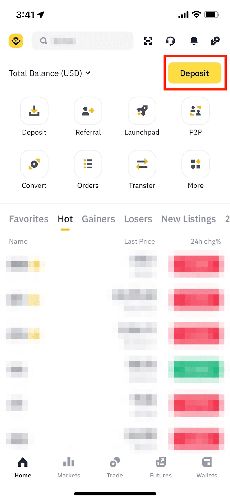
Once the world's largest Bitcoin exchange, handling over 70% of all BTC transactions. In 2014 it declared that 850,000 BTC had been stolen by hackers and subsequently went bankrupt. Creditors waited a decade before receiving partial compensation.
FTX (2022)
The world's second-largest exchange collapsed in November 2022. Founder Sam Bankman-Fried was found to have misappropriated customer funds, creating an approximately $10 billion shortfall. He was later convicted and imprisoned.
Other Cases
- QuadrigaCX (2019) – Canadian exchange whose founder allegedly died, leaving $190 million in customer funds unrecoverable
- Celsius (2022) – Crypto lending platform that went bankrupt due to a liquidity crisis
- Voyager (2022) – Crypto broker that collapsed after being hit by the 3AC fallout
Common Reasons Exchanges Fail
- Misappropriation of funds – Using deposited customer funds for their own investments or speculation
- Hacks – Security vulnerabilities that lead to stolen funds
- Poor management – Inadequate risk controls leading to heavy losses during downturns
- Ponzi schemes – Platforms designed to steal money from the start
- Regulatory crackdowns – Governments forcing closure and freezing assets
How to Evaluate Exchange Safety
Check regulatory licenses
Safe exchanges typically hold licenses in multiple jurisdictions:
- U.S. MSB license
- Japan FSA approval
- EU MiCA compliance
- Dubai VARA license
Check Proof of Reserves
After FTX, major exchanges introduced Proof of Reserves (PoR). Using Merkle tree technology, users can verify whether the exchange holds enough assets to cover all deposits.
Check operational history
The longer an exchange has been running, the more market cycles it has survived. Exchanges less than a year old carry higher risk.
Check the security track record
Review whether the exchange has been hacked and how it responded. When Binance lost 7,000 BTC to hackers in 2019, it fully compensated users — demonstrating sufficient reserves and responsibility.
Check the insurance fund
Top exchanges maintain user protection funds (e.g., Binance's SAFU fund) to compensate users after security incidents.
How to Reduce Exchange Risk
- Stick to top exchanges – Choose from the global top 5–10
- Don't put everything in one exchange – Spread assets across 2–3 platforms
- Use cold wallets for large holdings – Only keep what you need for trading on the exchange
- Withdraw regularly – Don't leave large amounts on an exchange long-term
- Monitor reserves – Regularly check the exchange's Proof of Reserves
- Follow industry news – Stay informed about exchange operations and regulatory developments
What Kind of Exchange Should You Avoid?
- No regulatory license in any country
- No KYC requirements (legitimate exchanges require KYC)
- Promises of high guaranteed returns
- Only advertises on social media with no coverage from reputable outlets
- Customer support unreachable or only available via Telegram
- No Proof of Reserves or audit reports
- Poorly designed website with a recently registered domain
Safety Reminders
Protecting your assets on an exchange requires ongoing vigilance:
- Choose reputable major platforms – Binance, OKX, Coinbase, Kraken, etc.
- Regularly check reserves – Follow updates to the exchange's Proof of Reserves
- Don't store too much on the exchange – Keep only what you need for trading; move the rest to a cold wallet
- Enable all security features – 2FA, anti-phishing code, withdrawal whitelist, etc.
- Watch for warning signs – If you notice withdrawal delays, unresponsive support, or other anomalies, transfer your assets immediately
- Educate yourself – Continuously learn about crypto security to improve your risk awareness. Download the official Binance app (Apple users see the iOS installation guide) to use the official app of a regulated platform
Are top exchanges completely safe?
Nothing is completely safe. FTX was once the world's second-largest exchange and still collapsed. However, top exchanges undergo more scrutiny and have been tested over time, making them relatively lower risk. The key is never to trust any single platform entirely.
Can I get my money back if an exchange goes bankrupt?
It depends. If the exchange has sufficient assets and enters a proper liquidation process, users may recover some or all of their funds — but it can take years. If it was a pure scam, the chances of recovery are very low.
Are decentralized exchanges safer?
DEXs eliminate the risk of platform exit scams (assets remain in your wallet), but they carry other risks such as smart contract vulnerabilities, phishing sites, and fake tokens. The risks are simply different.
How do I check an exchange's Proof of Reserves?
Major exchanges (like Binance and OKX) provide a Proof of Reserves page on their websites where users can verify that their deposits are fully covered.
Is "exchange earn" safe?
Exchange yield products essentially involve lending your assets to the exchange. While products from top exchanges are relatively safe, the risk of the exchange itself still exists. It's not recommended to put a large portion of your assets into exchange yield products.