A depth chart is a visual tool on exchanges that displays the distribution of current buy and sell orders at various price levels. It allows you to see at a glance how many buy orders and sell orders are waiting to be filled at different prices. Learning to read depth charts helps you assess supply and demand dynamics, identify support and resistance levels, and evaluate liquidity.
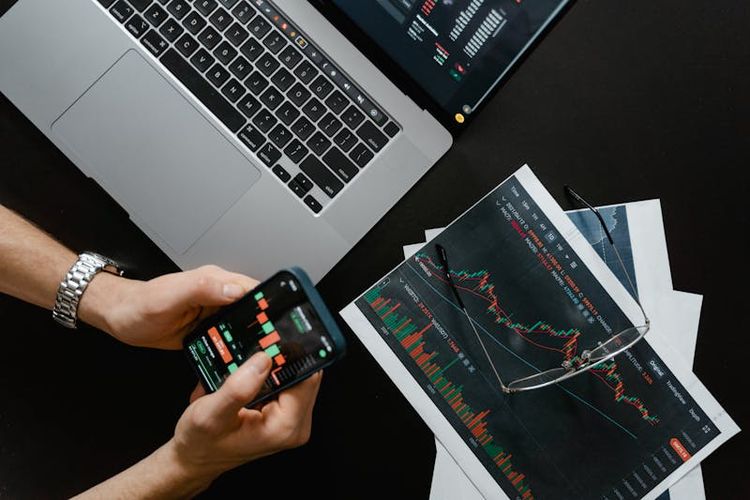
What Does a Depth Chart Look Like?
A depth chart is an area chart composed of two sides:
Left Side (Green Area): Buy orders (Bids), showing the cumulative quantity of buy orders at various price levels. Prices decrease from right to left.
Right Side (Red Area): Sell orders (Asks), showing the cumulative quantity of sell orders at various price levels. Prices increase from left to right.
Center Meeting Point: This is where the current market price sits, where buy and sell orders converge.
Horizontal Axis: Price Vertical Axis: Cumulative order quantity
The larger the area on the depth chart, the greater the total volume of orders within that price range.
How to Assess Buy and Sell Pressure from a Depth Chart
Buyers Are Stronger (Bullish Tendency):
- The green area is significantly larger than the red area
- This means buy orders far outnumber sell orders
- Buyer pressure is stronger, and the price may rise
Sellers Are Stronger (Bearish Tendency):
- The red area is significantly larger than the green area
- This means sell orders far outnumber buy orders
- Seller pressure is stronger, and the price may fall
Balanced Market:
- The green and red areas are roughly equal in size
- Bull and bear forces are evenly matched, and the market may trade sideways
Note: The depth chart only shows the current state of pending orders. Orders can be canceled at any time, so the depth chart is constantly changing.
What Are Buy Walls and Sell Walls?
You will often see sudden spike-like "wall" structures on a depth chart:
Buy Wall:
- A large concentration of buy orders appears at a certain price
- Shown as a noticeable bulge in the green area on the depth chart
- Indicates strong buyer support at that price level
- The price may be "held up" when it drops to this level
Sell Wall:
- A large concentration of sell orders appears at a certain price
- Shown as a noticeable bulge in the red area on the depth chart
- Indicates strong selling pressure at that price level
- The price may be "held down" when it rises to this level
Practical Significance:
- Buy wall → Potential support level
- Sell wall → Potential resistance level
- The larger the wall, the harder it is for the price to break through
How to Assess Liquidity from a Depth Chart
Liquidity reflects how efficiently a market operates:
Signs of Good Liquidity:
- Buy and sell orders are dense with small gaps between them
- The depth chart curve is smooth without large jumps
- Even large trades do not cause significant price slippage
Signs of Poor Liquidity:
- Orders are sparse with large gaps
- The depth chart curve has noticeable staircase-like jumps
- Even small trades can cause significant price swings
How Liquidity Affects You:
- Good liquidity → Low slippage on market orders; execution price is close to the displayed price
- Poor liquidity → High slippage on market orders; actual execution price may differ significantly from the displayed price
Choosing trading pairs with good liquidity is very important. After visiting Binance, you can view the depth chart directly on the trading page.

Practical Tips for Using Depth Charts
Tip 1: Identify Order Walls to Inform Trading Decisions
- Spot a large sell wall → That price level is a resistance zone and may be difficult to break through in the short term
- Spot a large buy wall → That price level is a support zone; consider placing a limit buy order nearby
Tip 2: Determine the Right Time for Large Trades
- Only place large market orders when the depth chart shows sufficient liquidity
- When liquidity is poor, use limit orders or split your order into smaller portions
Tip 3: Watch for Changes in Depth
- A buy wall suddenly disappears → Buyers have pulled their orders, support is weakening, be cautious
- A sell wall suddenly disappears → Sellers have pulled their orders, resistance is easing, a breakout may occur
Safety Reminders
When using depth charts for analysis, keep the following in mind:
- Depth charts can be manipulated: Large players can place massive fake orders to mislead the market and cancel them when the price approaches
- Do not fully trust buy and sell walls: Many walls are "spoofed" orders designed to influence other traders' decisions
- Combine with other analysis tools: The depth chart only reflects current pending orders and cannot predict the future
- Small-cap coins have poor depth: Depth charts for low-market-cap coins have limited reference value and are easily manipulated
- Watch for frequent changes: The depth chart updates in real time; do not make long-term decisions based on a single snapshot
- Use the official Binance app to view real-time depth data. iPhone users can refer to the iOS installation guide for accurate data
Are the Depth Chart and the Order Book the Same Thing?
A depth chart is a visual representation of the order book. The order book displays the quantity of orders at each price in list format, while the depth chart converts this data into a graphical form. Both present the same data, just in different ways.
Is the Data on the Depth Chart Real-Time?
Yes, it is real-time, but with a slight delay (typically less than 1 second). Orders on the depth chart can be added or canceled at any moment, so what you see is a constantly changing snapshot.
Why Are Depth Charts for Major Coins Smoother?
Because major coins like BTC and ETH have more participants trading them, resulting in denser orders across price levels. The denser the orders, the smoother the depth chart curve. In contrast, smaller coins have fewer participants and sparse orders, causing the depth chart to appear staircase-shaped.
Are Depth Charts Useful for Short-Term Trading?
To some extent, yes. Short-term traders can use depth charts to observe instant buy and sell pressure and the location of large orders, which helps gauge short-term price direction. However, since depth charts change rapidly and can be manipulated, they should not be relied upon as the sole basis for decisions.