Bitcoin (BTC) is the world's first decentralized cryptocurrency, proposed by Satoshi Nakamoto in 2008 and officially launched in January 2009. Bitcoin operates without any central authority, using blockchain technology to achieve a peer-to-peer electronic payment system. As the pioneer of cryptocurrencies, Bitcoin remains the most valuable and influential digital asset today. If you want to buy Bitcoin, you can start your first trade on Binance.
How Does Bitcoin Work?
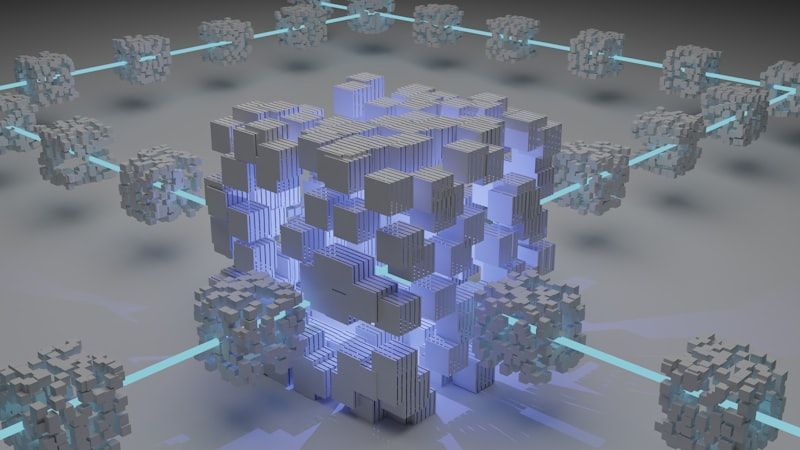
Bitcoin runs on a blockchain network. A blockchain can be understood as an open, transparent distributed ledger that records the complete history of all Bitcoin transactions.
Core mechanisms:
- Decentralized network: Tens of thousands of nodes worldwide maintain the ledger with no single point of control
- Proof of Work (PoW): Miners compete with computational power to validate transactions and create new blocks, earning Bitcoin rewards
- Cryptographic security: A public-private key encryption system protects transaction security and asset ownership
- Fixed supply: The total supply is capped at 21 million coins and will never increase
When you send Bitcoin, the transaction is broadcast to the entire network. Miners verify its legitimacy, package it into a block, and add that block to the blockchain. The whole process typically takes about 10 minutes.
Key Properties of Bitcoin
Scarcity
Bitcoin's total supply is capped at 21 million, with roughly 19.5 million already mined. The rate of new Bitcoin production halves every four years. This deflationary design has earned Bitcoin the nickname "digital gold."
Decentralization
No government, company, or individual can control the Bitcoin network. Anyone can participate in running the network, and there is no single point of failure.
Immutability
Once a transaction is confirmed on the blockchain, it cannot be modified or reversed. This guarantees the reliability of transaction records.
Transparency
All Bitcoin transactions are recorded on a public blockchain that anyone can view and verify. However, the identities of transacting parties remain pseudonymous (only wallet addresses are visible).
Global Circulation
Bitcoin can be freely transferred anywhere in the world without relying on the banking system, operating 24/7 without interruption.
A Brief History of Bitcoin
- 2008: Satoshi Nakamoto publishes the Bitcoin whitepaper
- 2009: The genesis block is created; the Bitcoin network goes live
- 2010: First real-world purchase with Bitcoin (10,000 BTC for two pizzas)
- 2013: Price breaks $1,000 for the first time
- 2017: Price approaches $20,000, sparking global attention
- 2020–2021: Institutional investors enter; price surpasses $60,000
- 2024: U.S. approves spot Bitcoin ETFs; Bitcoin enters mainstream finance
- 2025: Bitcoin continues as the core of digital assets
What Is Bitcoin Used For?
- Store of value: Similar to gold, serving as a hedge against inflation
- International remittances: Fast and low-cost cross-border transfers
- Payment method: An increasing number of merchants accept Bitcoin
- Investment asset: Buy and sell on exchanges for investment returns
- Censorship-resistant asset: In certain regions, Bitcoin is a vital tool for protecting wealth
How to Buy Bitcoin
The simplest way to buy Bitcoin is through a cryptocurrency exchange:
- Register an account on a major exchange and complete identity verification
- Deposit fiat currency via bank transfer, credit card, or P2P trading
- Select the BTC/USDT or BTC/USD trading pair on the trading page
- Enter the purchase amount and confirm the order
- The purchased Bitcoin will be credited to your exchange account
You don't need to buy a whole Bitcoin — the smallest unit is 0.00000001 BTC (1 satoshi). You can buy a fraction for just a few dozen dollars.
Safety Reminders
Keep these security tips in mind when investing in and holding Bitcoin:
- Use reputable exchanges: Only trade on licensed, mainstream exchanges and avoid obscure platforms
- Safeguard your private keys and seed phrase: If using a self-custody wallet, your seed phrase is everything — lose it and your funds are gone forever
- Enable security features: Activate 2FA, anti-phishing codes, and other security measures on your exchange account
- Watch out for scams: Don't trust promises of "guaranteed returns" or "zero-risk investments" — they're always scams
- Diversify storage: Store large amounts of Bitcoin in a hardware wallet for cold storage rather than keeping everything on an exchange
- Invest rationally: Bitcoin is highly volatile — only invest what you can afford to lose. You can download the Binance app — iPhone users can refer to the iOS installation guide to stay on top of market movements
Is Bitcoin Legal?
In most countries, holding and trading Bitcoin is legal. However, regulations vary by jurisdiction, and some countries impose restrictions on crypto trading. Check the laws in your region before proceeding.
Could Bitcoin Go to Zero?
While theoretically possible, considering Bitcoin's massive network effects, growing institutional adoption, and ETF approvals, the probability is extremely low. Bitcoin has been running for over 16 years and is the most battle-tested crypto asset.
Are Bitcoin and Blockchain the Same Thing?
No. Blockchain is the underlying technology; Bitcoin is the first application built on blockchain. Blockchain technology can be used for many other purposes — Bitcoin is just one use case.
What If I Can't Afford a Whole Bitcoin?
Bitcoin is infinitely divisible, with the smallest unit being 1 satoshi (0.00000001 BTC). You can purchase any amount — there's no need to buy a whole coin.
Is Bitcoin Mining Still Profitable?
Individual mining is very difficult to profit from due to the need for specialized hardware and cheap electricity. Most mining is done by large-scale operations. For the average person, buying Bitcoin is far more practical than mining it.